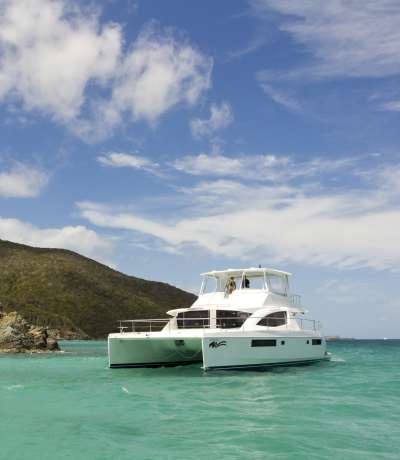
Leopard 51 Powercat Model Guide
The Leopard 51 Powercat, also commonly known as the Leopard 51 PC, is a long-range cruising power catamaran built by Robertson & Caine and designed by Simonis Voogd. Introduced in 2013, the model combines the space and stability of a large cruising catamaran with the speed, efficiency, and straightforward operation of a motor yacht.
The Leopard 51 Powercat was offered for both private ownership and the global charter market. A significant share of the production run was built for The Moorings, where the four-cabin charter version was known as the Moorings 514PC. These yachts feature four cabins with four en-suite heads, while privately configured Leopard 51 Powercats can also be found in the desirable three-cabin owner’s layout.
Designed from the outset as a dedicated powercat, the Leopard 51 PC pairs twin diesel propulsion with a shallow draft, expansive flybridge, forward cockpit, and multiple indoor and outdoor living areas. Its broad operating range allows owners to cruise comfortably in the high teens or slow down considerably when maximizing fuel efficiency and range is the priority.
The model went on to become one of Leopard’s most successful Powercats. 137 Leopard 51 PCs were ultimately built, and the model’s combination of private-owner and charter configurations means today’s pre-owned market offers buyers a wide selection of layouts, equipment levels, and ownership histories.
Today, the Leopard 51 Powercat is available exclusively on the pre-owned market. When comparing individual yachts, buyers should pay close attention to three-cabin versus four-cabin layout, private versus former-charter ownership, engine hours, maintenance history, equipment, and upgrades, as these differences can have a meaningful impact on both suitability and value.
Leopard 51 Powercat at a glance
The Leopard 51 Powercat is a 51-foot cruising power catamaran designed to balance long-range efficiency, fast-cruising capability, shallow draft and exceptional living space.
LOA:
Beam:
Draft:
Standard Engines:
Fuel:
Layouts:
Cruising Speed/ Top Speed:
Production:
Who is the Leopard 51 Powercat best suited for?
The Leopard 51 Powercat is particularly well suited to buyers who want motor-yacht performance without giving up the space, stability and efficiency advantages of a cruising catamaran.
Long-range cruisers who want control over speed and fuel burn
Independent testing demonstrates a very broad operating envelope. The boat can cruise in the high teens when passage time matters or slow to displacement speeds when maximizing range becomes the priority.
Owners transitioning from a monohull motor yacht
The Leopard 51 Powercat provides familiar motor-yacht features such as twin diesel propulsion, a large flybridge, substantial entertaining areas and an optional lower helm, but combines them with catamaran stability and a nearly 25-foot beam.
Couples planning extended cruising
The three-cabin owner’s version dedicates the starboard hull to the owner’s suite, making it particularly attractive for couples spending extended periods aboard.
Families and frequent hosts
The four-cabin arrangement increases guest capacity, while the flybridge, aft cockpit, saloon and forward cockpit allow people to spread throughout the yacht rather than crowding into one entertaining space.
Florida, Bahamas and Caribbean cruisers
The approximately 3-foot 3-inch draft makes the model particularly appealing in shallow cruising grounds. Leopard itself identified shallow-water access as a notable advantage of the model.
Sailors moving to power
Experienced catamaran sailors retain familiar benefits such as shallow draft, twin engines, widely separated hulls, multiple outdoor spaces and stability at anchor, without the operation and maintenance of a sailing rig.
What makes the Leopard 51 Powercat stand out
The Leopard 51 Powercat’s defining characteristic is not any single feature. It is the combination of efficiency, speed, space and multiple living areas in a genuinely offshore-capable package.
Purpose-designed powercat hulls
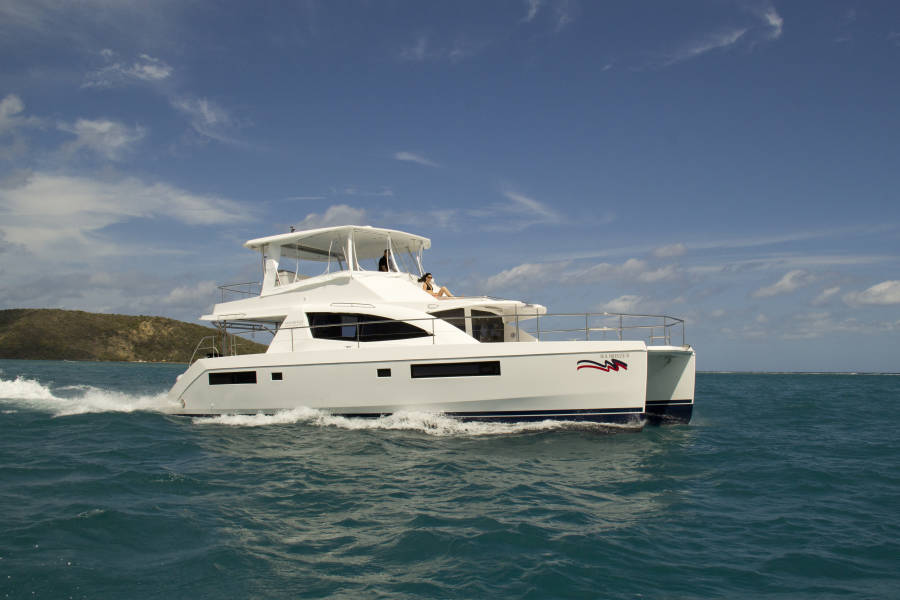
The Leopard 51 PC was designed from the outset as a dedicated powercat. The design brief required low resistance through a large speed range, good seakeeping and motion in a seaway, and consistent performance across changes in displacement.
For a brokerage buyer, the practical result is more important than the engineering terminology: the Leopard 51 PC can operate efficiently at displacement speed but is not restricted to traditional trawler speeds when an owner wants to cover distance more quickly.
Expansive flybridge
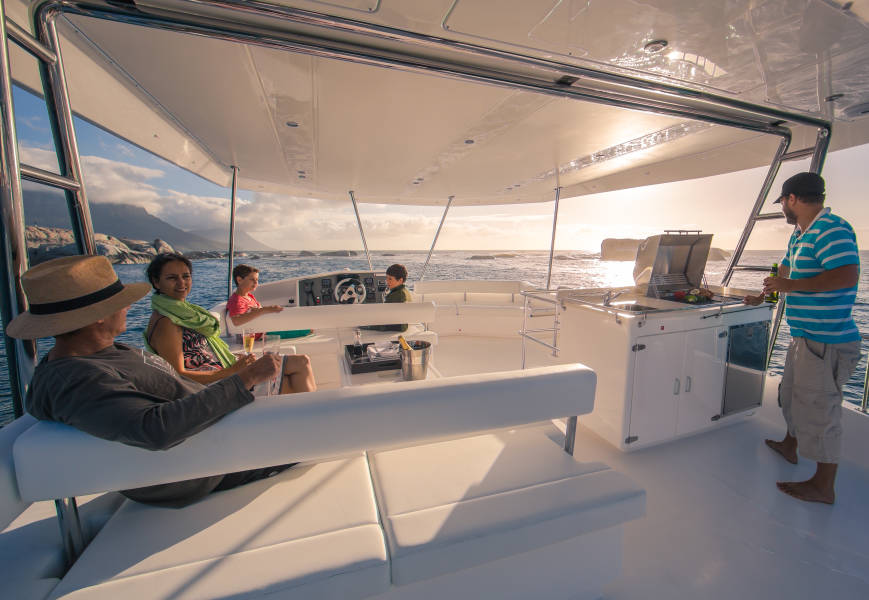
The flybridge is one of the signature features of the Leopard 51 Powercat.
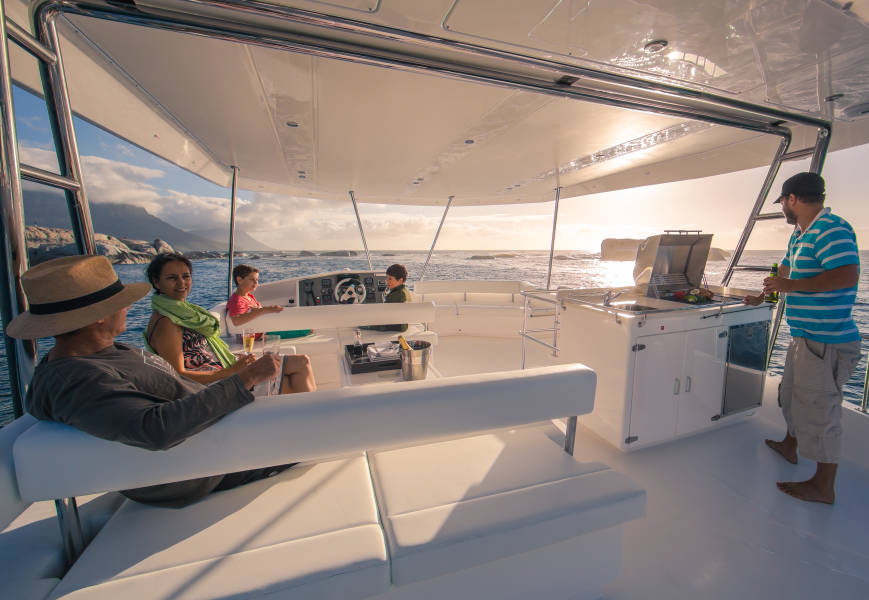
Leopard described the flybridge as the “heart and soul” of the yacht, incorporating a hardtop, extensive seating, sunbathing area and standard wet bar, with options that included a refrigerator, icemaker and grill.
This makes the upper deck a genuine living area rather than simply an elevated helm station.
Forward cockpit with direct saloon access
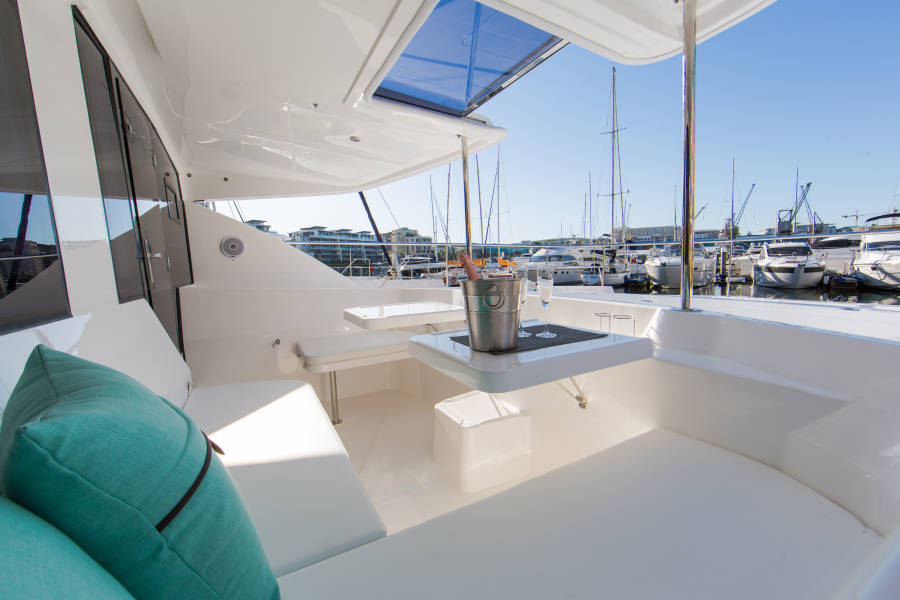
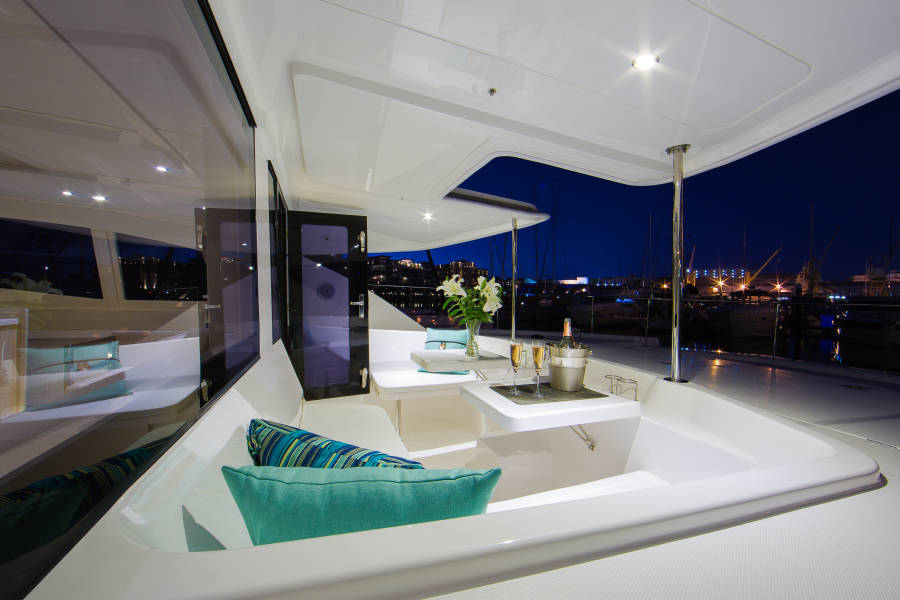
The forward cockpit provides a second major outdoor lounge separated from the aft cockpit and flybridge.
Direct access through the saloon creates a natural path through the center of the yacht. It also contributes to ventilation. During independent testing, BoatTEST specifically noted the airflow created through the saloon to the forward lounge.
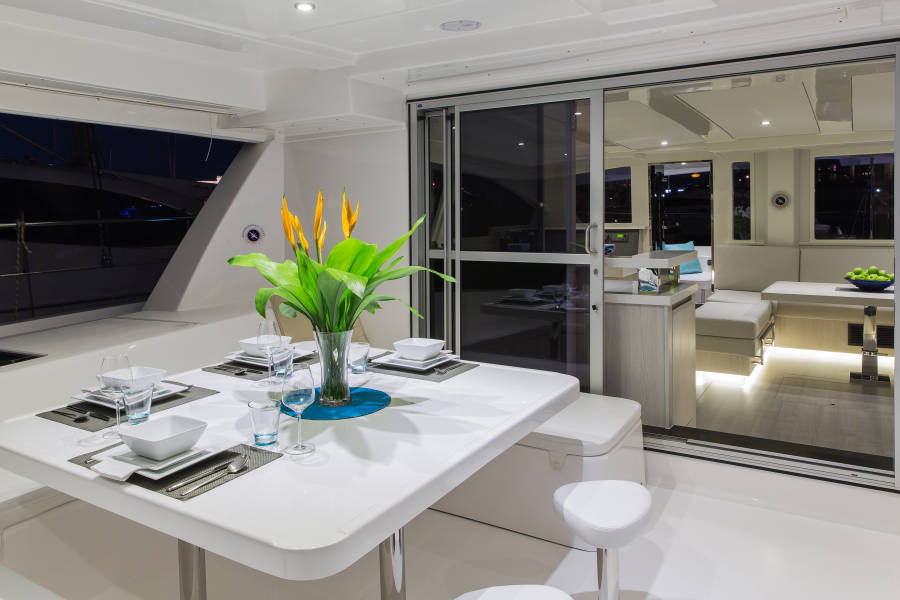
Multiple outdoor living areas
The Leopard 51 Powercat gives owners four distinct exterior zones:
- Aft cockpit
- Forward cockpit
- Flybridge
- Foredeck / sunbathing areas
That separation becomes especially valuable with guests aboard. One group can use the flybridge while others relax forward or remain closer to the galley and aft cockpit.
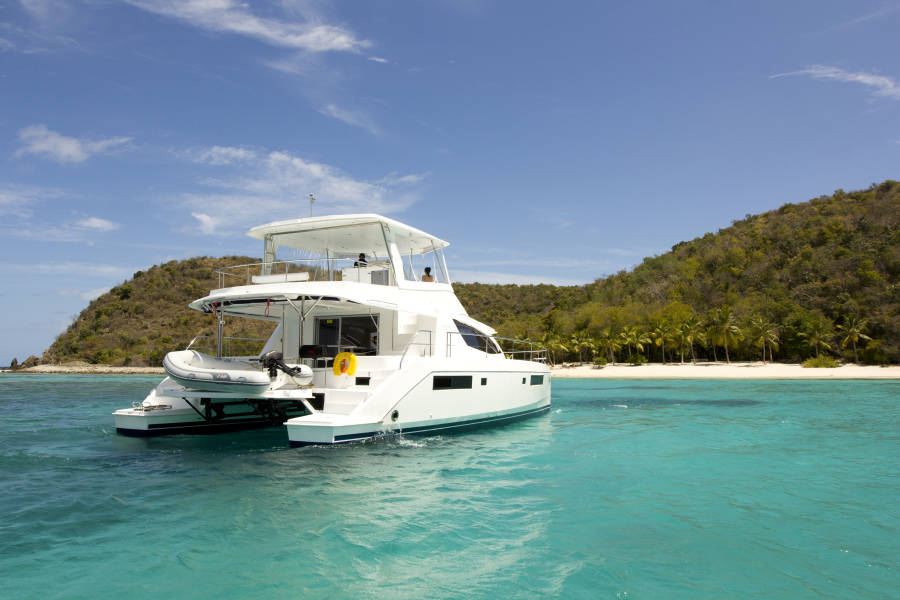
Shallow Draft
The Leopard 51 PC has a draft of 3 ft 3 in / .98 m.
Combined with the yacht’s range, this makes the Leopard 51 PC particularly well suited to island-hopping and shallow-water destinations where comparably sized monohull motor yachts face more restrictions.
Taken together, these features give the Leopard 51 Powercat a rare balance of space, performance, efficiency, and easy onboard living. It is a design that works just as well for an afternoon at anchor as it does for extended cruising.
Leopard 51 powercat Layout options
The Leopard 51 Powercat was offered in two principal accommodation arrangements.
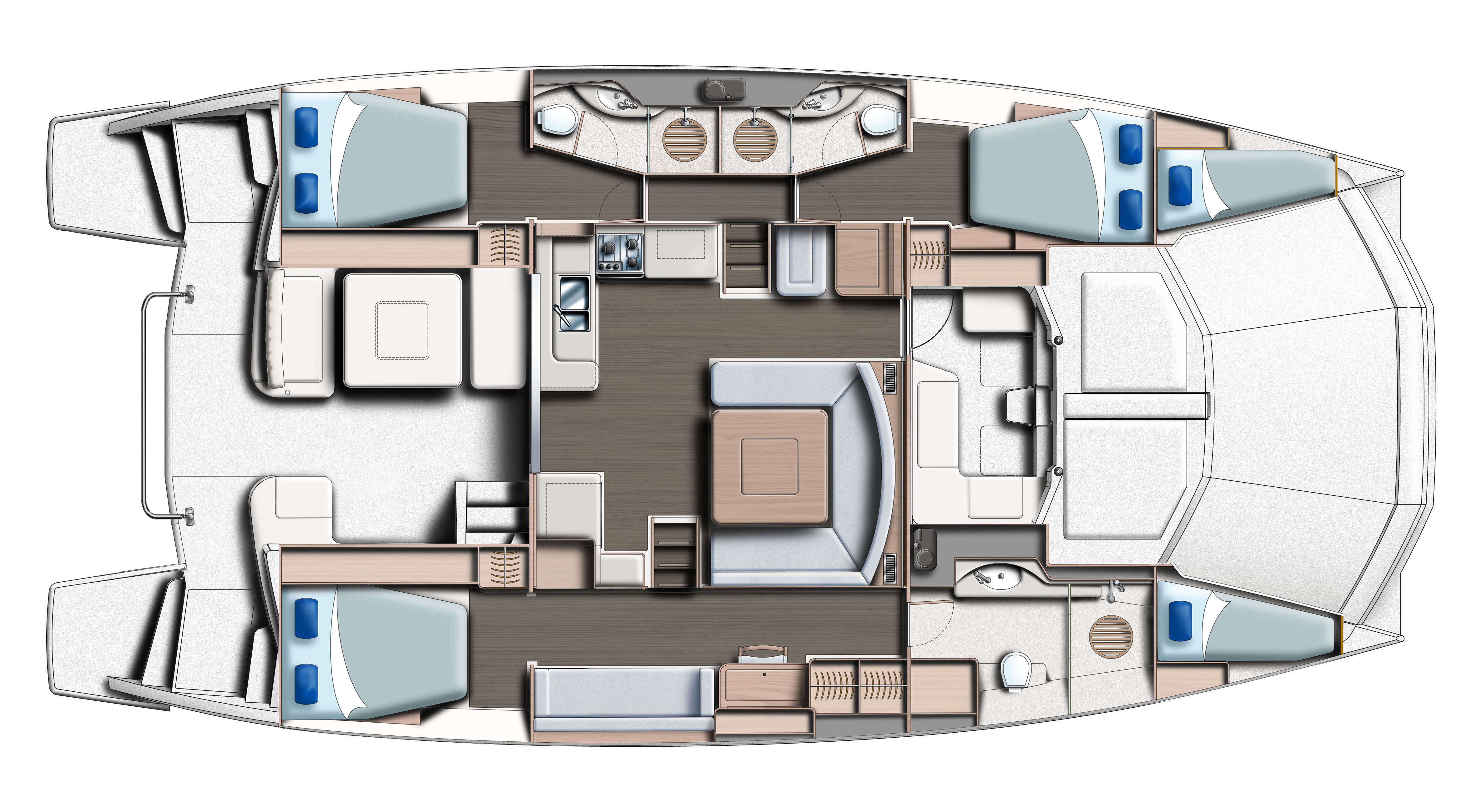
3-cabin / 3-head Owner’s Version
The three-cabin owner’s version prioritizes private living space, with the entire starboard hull dedicated to the owner’s suite and two guest cabins located in the port hull. This configuration offers greater privacy, storage, and separation from guests, making it particularly appealing to couples and owners planning extended cruising aboard their Leopard 51 Powercat.

4-Cabin / 4-Head version
The four-cabin layout prioritizes guest capacity, with two cabins in each hull and four heads. The configuration was also offered through The Moorings charter fleet as the Moorings 514PC, which is why this layout is commonly found on the pre-owned market.
Performance & Fuel Economy
One of the advantages of the Leopard 51 Powercat is the flexibility to choose between faster cruising and long-range efficiency. With twin 370 hp Yanmar engines, the Leopard 51 PC was designed to perform across a wide range of cruising speeds.
At around 17 knots and 3,000 RPM, fuel consumption is approximately 20.2 gallons per hour, with an estimated cruising range of about 300 nautical miles. Slow the boat to 8.2 knots at 1,500 RPM, and fuel consumption drops to approximately 2.9 gallons per hour, extending estimated range to more than 1,000 nautical miles.
Owners can cruise in the high teens when covering distance is the priority, or slow down considerably when maximizing fuel efficiency and range matters more.
Leopard 51 Powercat Fuel Consumption:
| RPM | Speed | Fuel Consumption | Estimated Range |
|---|---|---|---|
| 1,500 | 8.2 knots | 2.9 GPH | 1,028 nm |
| 2,000 | 9.9 knots | 6.8 GPH | 517 nm |
| 2,600 | 13.3 knots | 15.0 GPH | 317 nm |
| 3,000 | 17.0 knots | 20.2 GPH | 300 nm |
| 3,400 | 20.2 knots | 28.4 GPH | 254 nm |
| 3,800 | 23.2 knots | 37.4 GPH | 221 nm |
For buyers comparing cruising speeds, 17 knots offers a useful balance between speed and range, while displacement-speed cruising dramatically increases the distance the boat can cover between fuel stops.
The Leopard 51 Powercat was originally published with a cruising speed of approximately 17.4 knots and a maximum speed of up to 25 knots. Independent testing achieved a top speed of 23.2 knots, illustrating the effect that loading, conditions and individual boat setup can have on performance.
What to expect from a pre-owned Leopard 51 Powercat
As with any pre-owned yacht, actual fuel consumption and speed will vary from boat to boat. Vessel weight, cruising gear, bottom and propeller condition, engine condition, weather and sea state can all affect performance.
During a sea trial, buyers should compare RPM, speed and fuel consumption at several cruising speeds. This provides a useful picture of how an individual Leopard 51 Powercat is performing and allows the results to be compared with the model’s established performance figures.
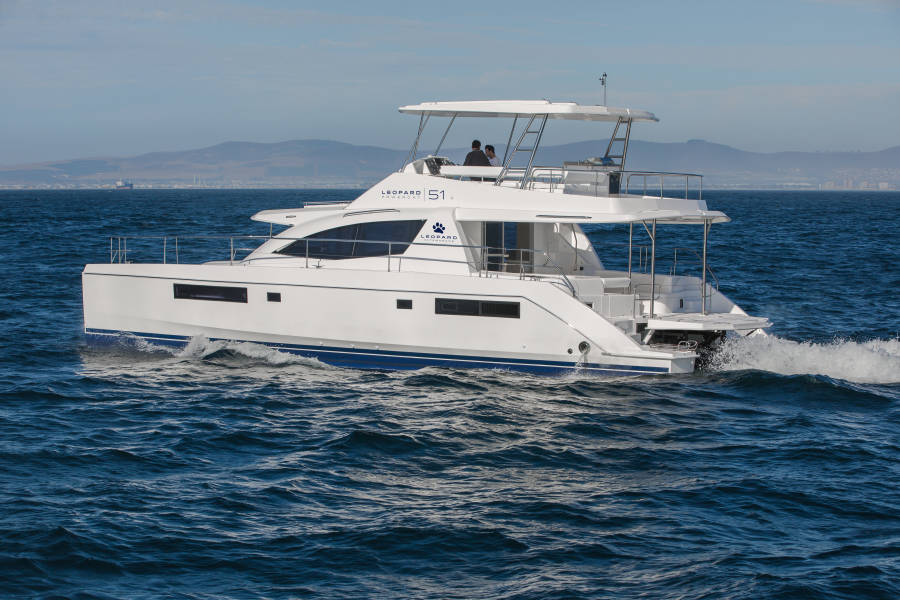
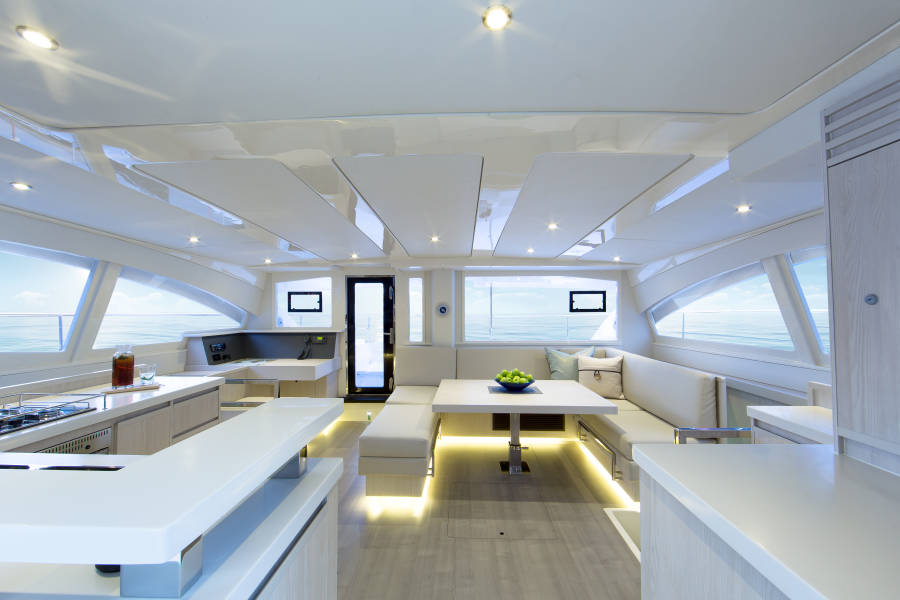
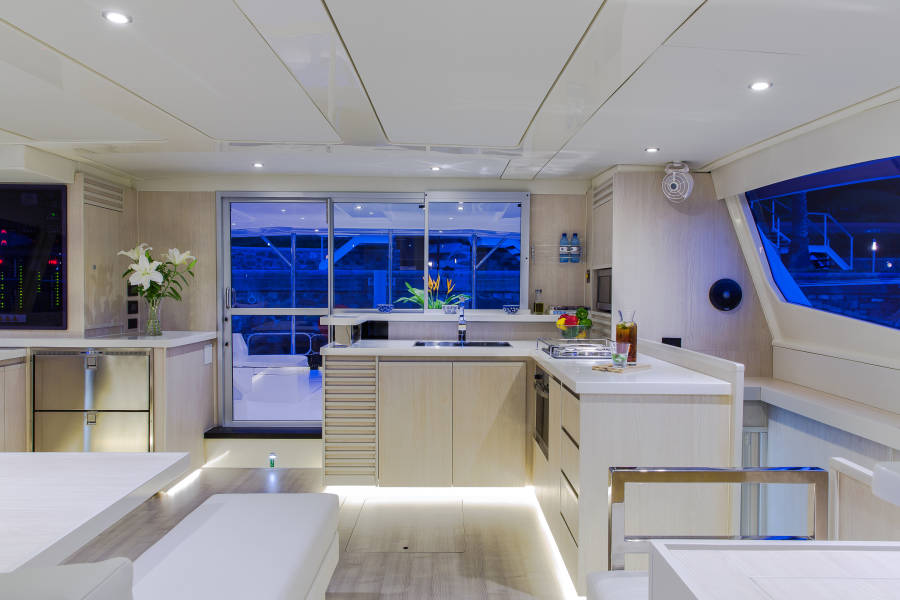
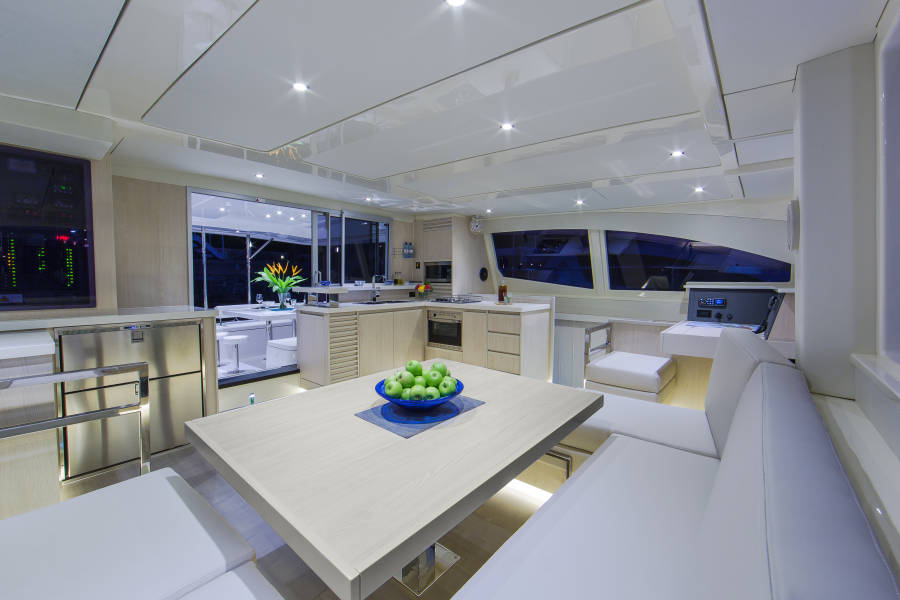
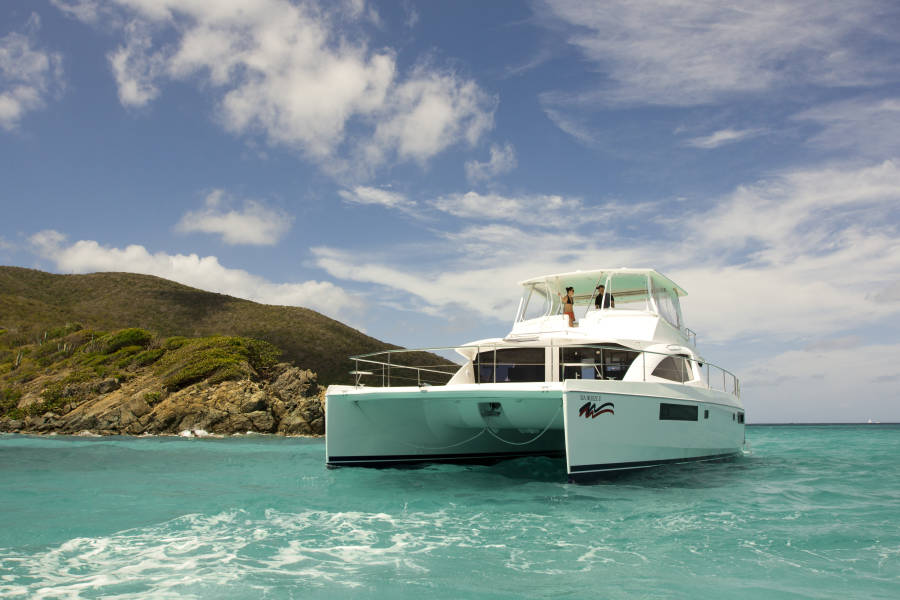
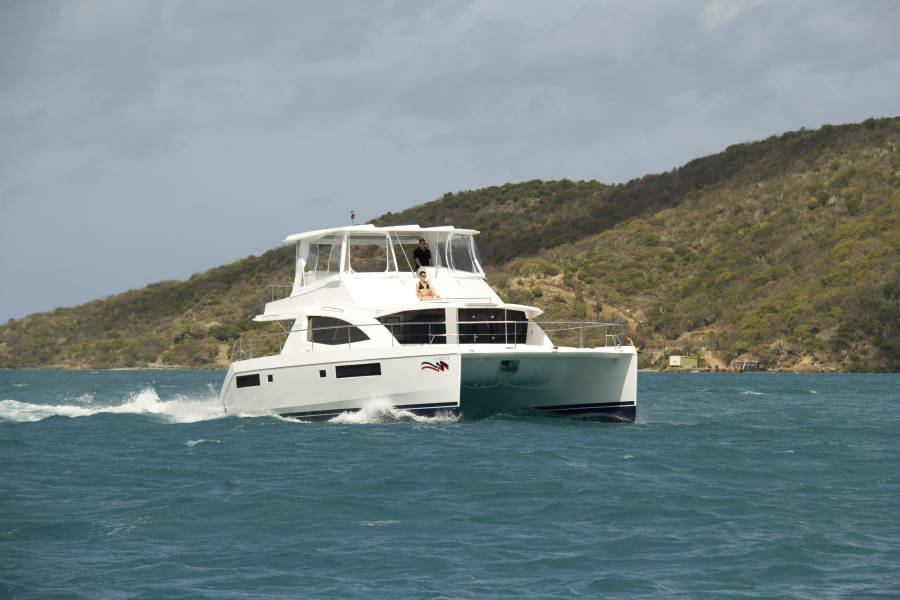
leopard 51 Powercat photo gallery



onboard videos
Take a guided tour of the Leopard 51 Powercat to explore the flybridge, forward cockpit, saloon, galley, accommodations, and overall layout, and see how the yacht’s indoor and outdoor living spaces connect.
media reviews
These resources provide a mix of independent testing, expert reviews, and real-world perspectives to help buyers understand how the Leopard 51 Powercat performs beyond the specifications.
BoatTEST – Leopard 51 PC Test & Review

Multihulls World – Leopard 51 PC Review

Boats.com Review – Leopard 51 PC
Taken together, these perspectives help show why the Leopard 51 Powercat became such an important model in Leopard’s Powercat range, giving buyers a clearer picture of how the boat performs, how its spaces work in practice, and what it is like to cruise and live aboard.
Leopard 51 Powercat FAQs
These are some of the most common questions buyers ask when researching the Leopard 51 Powercat on the pre‑owned market.
Fuel consumption varies considerably with speed. At approximately 17 knots, fuel consumption is around 20.2 gallons per hour, while slowing to 8.2 knots reduces consumption to approximately 2.9 gallons per hour.
Range depends heavily on cruising speed. At approximately 17 knots, estimated range is around 300 nautical miles. At 8.2 knots, estimated range increases to more than 1,000 nautical miles.
The Leopard 51 Powercat has a published maximum speed of up to approximately 25 knots.
The Leopard 51 Powercat has a total fuel capacity of approximately 396 US gallons, or 1,500 liters.
A total of 137 Leopard 51 PCs were produced, making it one of the most successful models in Leopard’s Powercat history.
The Leopard 51 Powercat was available in two primary configurations: a 3-cabin / 3-head owner’s version and a 4-cabin / 4-head version. The owner’s layout provides additional private space, while most of the four-cabin version were built for The Moorings charter fleet and prioritizes guest accommodations
Yes. Its fuel capacity, efficient hull design, shallow draft, generous accommodations, storage, and ability to operate efficiently at lower speeds make the Leopard 51 Powercat well suited to extended cruising.
When comparing pre-owned Leopard 51 Powercats, consider engine and generator hours, maintenance history, private versus charter use, layout, electronics, cruising equipment, running gear, and overall condition. A pre-purchase survey, engine inspection, and sea trial are strongly recommended.
The lowest asking price is not always the best value. Compare the yacht’s condition, engine hours, maintenance history, equipment, ownership history, and recent upgrades when evaluating different Leopard 51 Powercats.
Most pre-owned Leopard 51 Powercats currently on the market are asking approximately $400,000 to $700,000, depending on model year, layout, condition, engine hours, ownership history, location, and equipment. Well-equipped 3-cabin owner’s versions, privately owned yachts, and extensively upgraded boats may command prices above this range.
Former charter yachts often represent the more accessible end of the market, while privately owned or extensively refitted Leopard 51 Powercats tend to command a premium. When comparing prices, buyers should consider not only the asking price but also maintenance history, engine and generator hours, recent upgrades, electronics, cruising equipment, and overall condition.
Leopard 51 Powercats for Sale
When you’re ready to move from researching the model to comparing individual yachts, explore current Leopard 51 Powercats for sale to compare available listings, layouts, locations, ownership histories, and onboard equipment.
VIEW LEOPARD 51 POWERCAT LISTINGS